


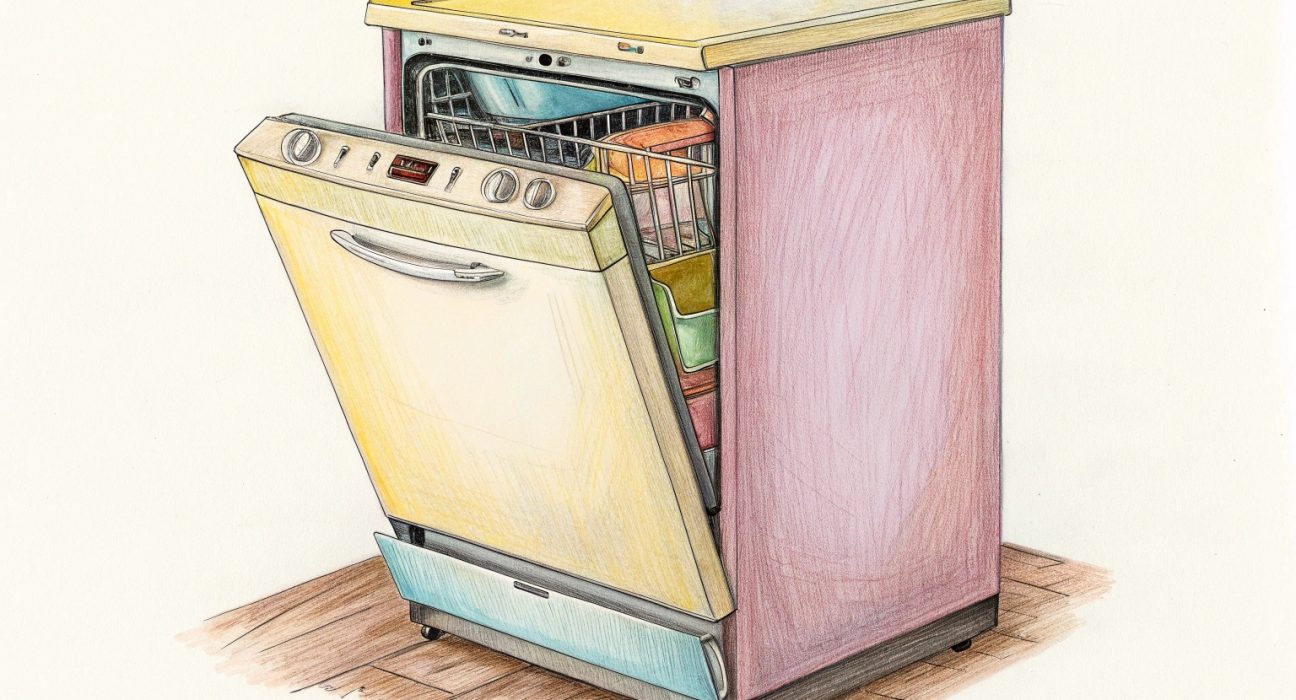
A dishwasher has become an indispensable helper in the kitchen of many Ukrainian families. If you’ve been thinking about purchasing one or already using this device, you’ve probably been interested in the question: how much water does a dishwasher use per cycle? This question is particularly relevant in the context of rising water supply rates and the general desire to save resources. In this article, we will examine in detail how much water a dishwasher takes during operation, what it depends on, and how to optimize water usage for daily dishwashing.
The Role of Water in Dishwasher Efficiency
Water is a key element for quality dishwashing in any dishwasher. Without sufficient water, it’s impossible to ensure proper detergent dissolution, effective removal of dirt, and proper rinsing. However, excessive water use is also undesirable as it leads to unnecessary costs and strain on the drainage system.
Modern dishwasher manufacturers are constantly working on optimizing water consumption while maintaining high washing efficiency. Most dishwashers are equipped with special sensors that determine the level of dish soiling and accordingly regulate the amount of water needed for a specific cycle.
It’s important to understand that the efficiency of water use in a dishwasher largely depends on proper dish loading, selecting the appropriate washing program, and regular device maintenance. Clogged filters and nozzles can lead to increased water consumption without improving washing quality.
Average Water Consumption During One Cycle
If you’re interested in a specific figure of how much water a dishwasher takes per standard cycle, the answer will depend on many factors. On average, modern dishwashers use from 6 to 15 liters of water per full washing cycle. This is significantly less than hand washing, which can use from 40 to 80 liters of water for a similar amount of dishes.
Here are some average water consumption indicators for different cycle types:
- Economy mode: 6-9 liters
- Standard mode: 10-12 liters
- Intensive washing (for heavily soiled dishes): 12-15 liters
- Quick wash (short programs): 7-10 liters
It’s important to note that compact dishwashers and countertop models usually consume less water — about 6-8 liters per cycle. Full-size models, which accommodate more dishes, accordingly use slightly more water, however, when calculated per unit of dishes, the efficiency remains high.
It’s also worth noting that how much water a dishwasher uses depends on its energy efficiency class. Machines with a high efficiency class (A+++ or A++) are usually optimized for minimal consumption of both electricity and water, making them more economical in the long term, despite their higher initial cost.
Looking for more information about dishwashers? Check out our related article: How to connect a dishwasher
Comparison of Water Consumption by Different Dishwasher Models
When choosing a dishwasher, it’s important to pay attention not only to the price and design but also to how much water it will consume throughout its entire service life. Different manufacturers and models have significant differences in their approach to water usage.
The most economical are usually premium segment machines from well-known European brands that invest significant funds in developing energy-efficient technologies. However, quite economical options can be found among budget models as well.
| Brand | Model | Type | Water Consumption (standard cycle) | Energy Efficiency Class |
|---|---|---|---|---|
| Bosch | Serie 6 | Full-size | 9.5 L | A+++ |
| Miele | G7100 SC | Full-size | 8.9 L | A+++ |
| Electrolux | ESF9516LOX | Full-size | 10.5 L | A++ |
| Indesit | DSFE 1B10 | Full-size | 12 L | A+ |
| Siemens | iQ500 | Compact | 7.5 L | A++ |
When discussing the main factors affecting water consumption by different models, it’s worth highlighting:
- Year of manufacture — newer models are usually more economical
- Water recirculation technology — some machines reuse water from the final rinse
- Presence of dirt sensors — adapt water amount to actual needs
- Type of sprayers — innovative nozzles provide better coverage with less water usage
- Size and capacity — compact models use less water but hold fewer dishes
Interestingly, some premium dishwasher models are equipped with an “AquaSensor” system that analyzes water clarity and stops the cycle as soon as dishes become clean, allowing additional water savings.
Tips for Reducing Water Consumption in Household Conditions
Even if you don’t have the most economical dishwasher model, you can significantly optimize its water consumption by following several simple operation rules.
First of all, it’s important to load the dishwasher correctly. Run it only when fully loaded, but don’t overload it — dishes should be placed so that water can freely circulate between items.
It’s not necessary to pre-rinse dishes before loading — just remove large food remnants. Modern dishwashers handle dirt well, and additional rinsing under the tap only leads to unnecessary water consumption.
Here are several effective ways to reduce water consumption:
- Use eco-mode — it consumes less water, although it runs longer
- Regularly check and clean filters and sprayers
- Use quality detergents specifically designed for dishwashers
- Adjust water hardness level according to indicators in your region
- Choose programs with lower water temperature if dishes aren’t very dirty
It’s also worth paying attention to the water hardness level in your region. Excessively hard water not only deteriorates washing quality but can also lead to limescale buildup on heating elements, reducing machine efficiency and increasing water consumption. Using water softeners or special dishwasher salt can significantly extend your appliance’s service life.
Conclusion
As we’ve discovered, modern dishwashers consume significantly less water than hand washing dishes — on average 6-15 liters per cycle compared to 40-80 liters for hand washing. This makes them not only a convenient household appliance but also a truly ecological solution for daily use.
When choosing a dishwasher, it’s worth paying attention to the energy efficiency class, presence of innovative water-saving technologies, and consumption indicators specified by the manufacturer. Investment in a more economical model usually pays off within several years through reduced utility bills.
Proper operation and maintenance of your dishwasher will not only extend its service life but also help optimize water consumption.