


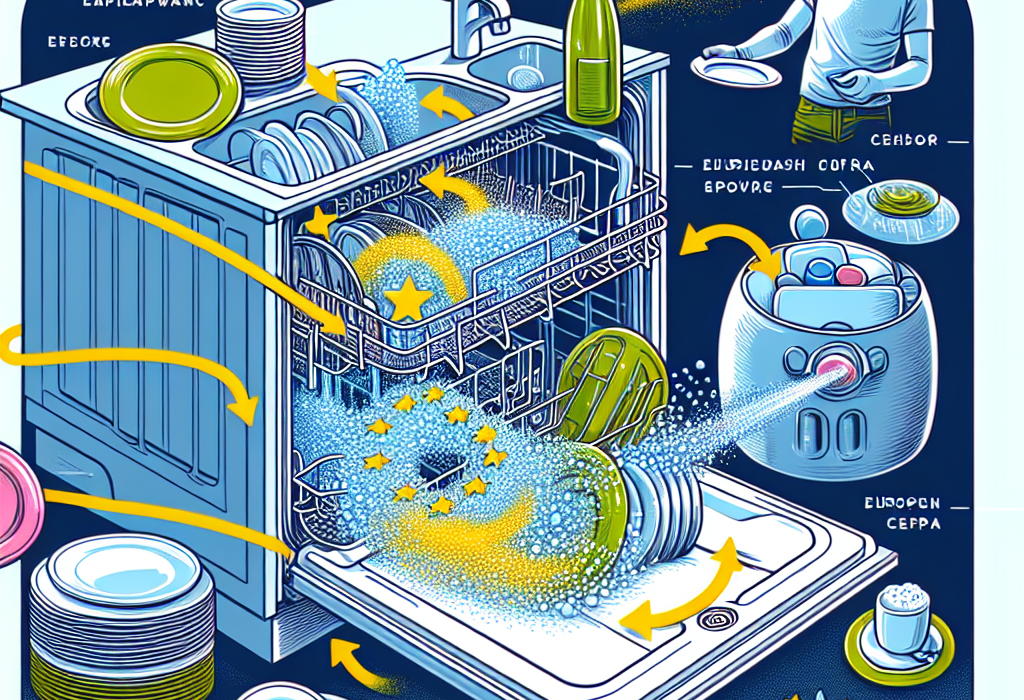
Dishwashers have become real saviors for modern housewives and housekeepers, freeing us from the daily routine of washing dirty dishes. However, few people think about what happens inside this “magic box” when we close the door and press the “Start” button. Understanding how a dishwasher works will not only satisfy your curiosity but also help you use this appliance more effectively in everyday life. In this article, we will look at the operating principle of a dishwasher in simple terms, without complex technical terminology, so that everyone can understand this process.
Main Components of a Dishwasher and Their Functions
Before understanding how a dishwasher works, it’s worth getting acquainted with its main “organs”:
1. Dish racks – located at different levels, allow rational placement of various types of dishes: lower rack for large items (pots, pans), upper rack for smaller ones (plates, cups).
2. Water sprayers (spray arms) – rotate under water pressure and spray water on dishes from different sides. Usually, there are two or three of them, located at different levels of the machine.
3. Filter system – catches food residues, preventing pump clogging and re-settling of dirt on dishes.
4. Heating element – heats water to the required temperature (usually 45-75°C).
5. Detergent dispenser – opens at the right moment of the washing cycle, releasing detergent.
6. Control unit – the “brain” of the machine that controls all washing stages according to the selected program.
How the Dishwashing Process Works in the Machine
The operating principle of a dishwasher consists of several sequential stages:
1. Pre-rinse – the machine takes in a small amount of cold water and sprays it on the dishes, washing away large food remains. This water is drained immediately after this stage.
2. Main wash – the machine takes in water, heats it to the set temperature, and the system dispenses detergent from the dispenser. Powerful spray arms under pressure spray hot water with detergent on dishes from different sides, effectively breaking down and washing away dirt.
3. Intermediate rinse – used water is drained, the machine takes in clean water and rinses away remaining detergent and dirt.
4. Final rinse – the machine takes in water, heats it to a high temperature (often higher than during the main wash) and adds rinse aid. This ensures dish shine and accelerates drying.
5. Drying – after water drainage, dishes dry naturally thanks to residual heat or with the help of a fan (depending on the model).
This entire process is controlled by the machine’s electronics, which regulates the duration of each stage, water temperature, and water amount according to the selected program. That’s why a dishwasher can effectively clean even the most difficult stains while using less water than hand washing.
Curious about kitchen appliances? Check out our guide: How to connect a dishwasher
Types of Programs and Modes for Different Kitchen Utensils
Modern dishwashers offer various programs designed for effectively washing different types of dishes. Understanding these modes will help you get perfectly clean dishes while saving electricity and water.
Here are the most common programs found in most dishwashers:
1. Intensive program – for heavily soiled dishes, pots, and pans with burnt food residues. Operates at 65-75°C.
2. Economic (Eco) – the most energy-efficient program for moderately soiled dishes. Usually takes longer but consumes less electricity.
3. Quick program – for lightly soiled dishes when you need to quickly wash a small number of items (30-45 minutes).
4. Delicate – for fragile glassware and crystal, washes at lower temperatures (around 40-45°C).
5. Pre-soak – short cycle without detergent for freshly soiled dishes that will be washed later.
| Program | Temperature (°C) | Duration (min) | Water usage (L) | Perfect for |
|---|---|---|---|---|
| Intensive | 65-75 | 120-150 | 15-19 | Pots, pans with burnt food |
| Economic | 50-55 | 170-220 | 9-12 | Daily dishes with moderate soiling |
| Quick | 45-55 | 30-45 | 10-12 | Lightly soiled dishes |
| Delicate | 40-45 | 80-90 | 12-14 | Fragile glass, crystal |
Tips for Effective Dishwasher Use and Maintenance
To ensure your dishwasher serves long and efficiently, and your dishes shine with cleanliness, follow these simple tips:
1. Load dishes correctly – don’t overload the machine, place items so water can freely circulate between them. Place plates vertically, not horizontally.
2. Remove large food residues – although the dishwasher is designed to remove dirt, large pieces of food can clog the filter.
3. Use quality products – saving on salt, rinse aid, or detergent can negatively affect washing results and machine condition.
4. Clean the filter regularly – recommended weekly to avoid clogging and unpleasant odors.
5. Run the machine only when full – this saves water, electricity, and detergents.
Monthly maintenance of your dishwasher should include:
- Checking and cleaning water sprayers from blockages
- Wiping door seals
- Removing limescale with special cleaner
- Cleaning interior walls from residue
- Monitoring salt and rinse aid levels
Conclusion
A dishwasher is not just a useful household appliance but a real helper that saves our time and energy. Understanding its operating principles and proper use allows you to get maximum benefit from this appliance. The right program selection for specific dish types, regular machine maintenance, and following simple operation rules will ensure a long life for your helper and perfect washing results.
Remember that a modern dishwasher not only cleans dishes better compared to hand washing but also does it more hygienically thanks to high water temperatures, and saves water (up to 70% less compared to hand washing). So use this smart appliance to its full potential, and let the care for clean dishes no longer take your precious time!


