


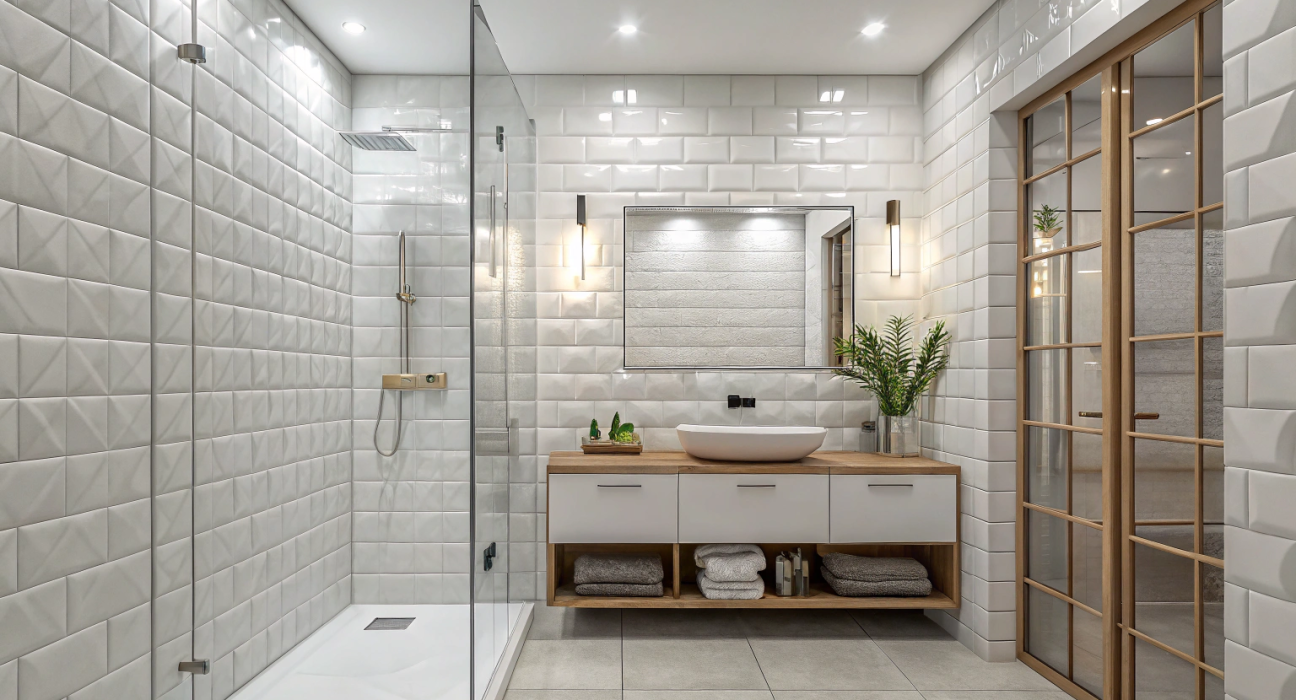
Choosing bathroom tiles may initially seem like a challenging task due to the many options available on the market. However, properly selected tiles will not only make your bathroom stylish and pleasing to the eye but also ensure durability and functionality. Many apartment owners think about the question: which tiles to choose for the bathroom? This is especially true for those who have small spaces and think about which tiles to choose for a small bathroom. In this article, we will look at various facing materials options, their advantages and disadvantages, and provide useful advice on how to choose bathroom tiles to meet all your requirements.
Choosing Material for the Bathroom
Before starting bathroom renovations, it’s important to determine which tile material will best suit your conditions. The market offers several main types:
Ceramic tiles – the most popular option due to optimal price-quality ratio. It’s moisture resistant, doesn’t require complex maintenance, and is available in various colors and textures. If you don’t know which tiles to choose for the bathroom with a limited budget, ceramic tiles will be the optimal solution.
Porcelain stoneware – stronger and denser material, making it practically invulnerable to moisture. It’s perfect for flooring as it’s non-slip and resistant to mechanical damage. This option is somewhat more expensive, but its durability compensates for initial costs.
Glass tiles – gives the bathroom special shine and depth. It perfectly reflects light, making it an ideal choice for those thinking about which tiles to choose for a small bathroom to visually expand the space.
Natural stone (marble, granite, travertine) – elegant and unique material that adds luxury to the bathroom. However, it requires regular treatment with special products for moisture protection and costs more.
Advantages and Disadvantages of Different Tile Types
To properly understand how to choose bathroom tiles, you need to know not only the advantages but also disadvantages of each material type:
Ceramic tiles
Advantages: affordable price, wide assortment, easy installation, water resistance, easy maintenance.
Disadvantages: can crack under strong impacts, cold to touch (which can be solved by installing underfloor heating).
Porcelain stoneware
Advantages: extraordinary strength, wear resistance, low water absorption, can imitate any materials (wood, stone).
Disadvantages: heavy weight, cutting and processing complexity, higher price compared to ceramic tiles.
Glass tiles
Advantages: impressive appearance, resistance to stains, moisture and chemicals, visually expands space.
Disadvantages: high cost, fragility during installation, installation complexity, can be slippery for flooring.
Natural stone
Advantages: unique appearance of each tile, natural beauty, prestige, durability.
Disadvantages: high price, porosity (requires regular waterproofing), installation complexity, sensitivity to acidic cleaners.
When choosing bathroom tiles, it’s important to consider not only aesthetic preferences but also practical aspects. For families with children or elderly people, it’s worth choosing tiles with anti-slip coating for flooring. If you’re thinking about which tiles to choose for a small bathroom, pay attention to light tones and glossy surfaces that will add space and light.
Looking to enhance your bathroom renovation knowledge? Check out our related article: What are the permissible hours for renovation work
Design Solutions and Style Preferences
When the basic question “which tiles are best for the bathroom” is resolved in terms of material, it’s worth focusing on design that will reflect your personality and create the desired atmosphere. The modern market offers many style solutions:
Popular design trends:
- Mosaic – perfect option for accent walls or decorative inserts
- Marble-look tiles – gives the room an elegant appearance even without using natural stone
- Geometric patterns – add dynamics and modernity
- 3D effects – create optical illusions and add depth to space
- Metro effect – classic option of rectangular tiles with beveled edges
For small bathrooms, the question of which tiles to choose for a small bathroom is particularly relevant. Here, designers recommend using large-format tiles (60×60 cm or even larger) – they create fewer joints, which visually makes the space more unified and larger. You can also apply diagonal tile laying, which “pushes apart” the walls.
An interesting solution is combining different types of tiles: for example, using one for walls, another for floors, and a third for accent decoration. This approach allows creating a unique interior that matches your preferences.
| Style Direction | Recommended Tiles | Design Features |
|---|---|---|
| Scandinavian | Matte white, grey, wooden textures | Minimalism, light tones, natural material accents |
| Classic | Glossy with ornaments, marble imitation | Symmetry, decorative elements, neutral colors |
| Loft | Brick imitation, concrete, raw surfaces | Industrial character, exposed utilities, rough textures |
| Eco-style | Natural shades, wood imitation, stone | Natural motifs, plant elements, natural materials |
Tips for Laying and Maintaining Bathroom Tiles
Even the best tiles will lose their appearance without proper installation and maintenance. So let’s look at the main recommendations on how to choose bathroom tiles and properly maintain them:
Secrets of proper installation:
- Before starting work, ensure perfectly level wall and floor surfaces
- Use waterproof adhesives and grouts specifically designed for bathrooms
- Calculate the required amount of tiles with a 10-15% surplus for cutting and possible damage
- When laying the floor, ensure a slight slope towards the drain for better water drainage
- Don’t neglect waterproofing – it will extend the service life of the entire structure
If you’re choosing tiles of different sizes or formats, be sure to calculate the laying pattern in advance. This will help avoid unpleasant surprises during installation and minimize the amount of cuts.
Regarding maintenance, each type of tile has its peculiarities. Ceramic tiles and porcelain stoneware can be cleaned with regular bathroom cleaners. Natural stone requires special non-abrasive cleaners with neutral pH. Glass tiles are easy to clean, but streaks are visible on them, so after washing, they should be wiped dry with a soft cloth.
For grouting joints, it’s recommended to choose water-repellent options with antibacterial properties, which is especially important for rooms with high humidity. You can also use special products for joints that prevent the appearance of mold and fungus.


