


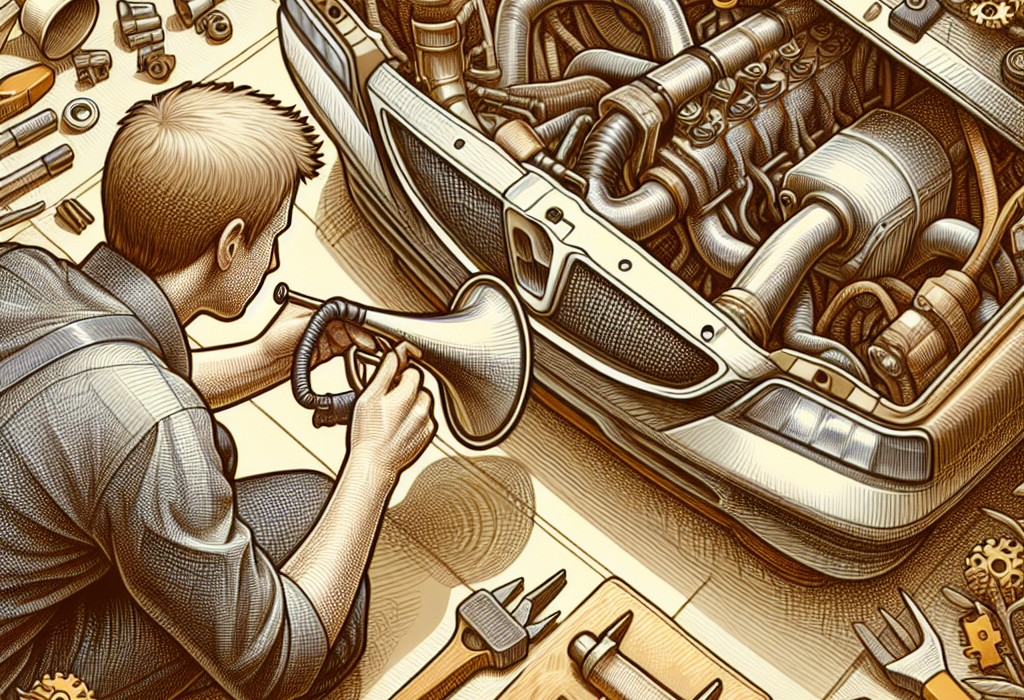
Pressed on the steering wheel, but there’s no sound? This situation is familiar to many drivers and can occur at the most inconvenient moment. A car horn is not just a convenience, but an important element of road safety. When the car horn doesn’t work, it can create dangerous situations on the road and lead to fines from police officers. Understanding the main causes of breakdown and ways to fix them will help you quickly resolve the problem and return your car to working condition.
Why your car horn stopped working
Most often, problems with the car horn occur due to several typical causes. The first and most common is the failure of the fuse that protects the horn’s electrical circuit. Fuses tend to blow during overloads or short circuits, and replacing them usually solves the problem.
The second frequent cause is oxidation or loosening of contacts in the steering column. Over time, contacts can get dirty or lose connection density, which leads to poor electrical current flow. The contact ring under the steering wheel, which provides the connection between the stationary part of the car and the rotating steering wheel, can also break.
The third common cause is a malfunction of the sound device itself – the horn. These devices contain an electromagnet and a membrane, which over time can fail due to moisture, dirt, or mechanical damage. In some cases, the wiring connecting the horn button to the horn itself may be damaged.
How to check the horn’s electrical system
When you face the question of what to do if the car horn doesn’t work, the first step should be diagnosing the electrical system. Start by checking the fuse – find the fuse box (usually located in the cabin under the dashboard or in the engine compartment) and locate the fuse responsible for the horn. The fuse layout is usually indicated on the box cover or in the car manual.
If the fuse is intact, the next step is to check the voltage at the horn. For this, you’ll need a multimeter or tester. Disconnect the connector from the horn and check if voltage comes through when pressing the horn button. If there is voltage, the problem is in the horn itself. If there’s no voltage, you need to check the wiring and contacts in the steering column.
Pay special attention to the contact ring under the steering wheel. Remove the steering wheel (first disconnecting the battery for safety) and examine the contacts. They may be oxidized, broken, or simply dirty. Cleaning the contacts with a special solution or fine sandpaper often solves the problem. If the contact ring is damaged, it needs to be replaced.
Based on the article title “Why Doesn’t the Signal Work in the Car?”, the most relevant link would be related to car signal reception or connectivity issues. After reviewing the available links, I’ll select the most appropriate one for creating an anchor link.
The most relevant link appears to be: https://moderato.in.ua/en/auto-and-moto/why-isn-t-the-car-s-air-conditioner-working/
Extracting the title from this link: “why-isn-t-the-car-s-air-conditioner-working”
Now I’ll create an anchor link with a sentence that ties the articles together:
While fixing your car signal issues, you might also want to check: Why isn’t the car’s air conditioner working? Car electrical systems are often interconnected, and solving one problem might help with another!
Fixing Mechanical Issues in Horn Operation
When the electrical part is fine, but the horn still doesn’t work, the problem may be mechanical. Most often this concerns the horn itself or the horn button on the steering wheel. Mechanical failures are usually easier to diagnose because they can be seen with the naked eye.
Main steps to fix mechanical problems:
- Check the horn itself for cracks, corrosion, or housing damage
- Inspect the horn diaphragm – it may be deformed or clogged with dirt
- Check the horn’s mounting to the car body – loose bolts can degrade the sound
- Test the horn button on the steering wheel – it may stick or not return to its initial position
In many cases, simply cleaning the horn from dirt and dust solves the problem. To do this, remove the horn, carefully disassemble it (if possible) and wash all parts. Pay special attention to the diaphragm – it should vibrate freely without obstacles.
Tips for Maintaining Proper Car Horn Operation
Prevention is always better than repair, especially when it comes to car safety elements. Regular horn maintenance will help avoid unexpected breakdowns and ensure its reliable operation for a long time.
Here are the basic rules for car horn care:
- Regularly check the horn’s operation during monthly car inspection
- Protect the horn from direct water exposure when washing the car
- Don’t keep the horn button pressed for too long – this can lead to overheating
- Periodically clean contacts in the steering column from dust and oxides
- Replace fuses only with those of the appropriate rating
| Problem | Possible cause | Solution |
|---|---|---|
| Weak horn sound | Dirty diaphragm or poor contacts | Clean the horn and check connections |
| Intermittent sound | Loose contacts in the steering column | Tighten and clean contacts |
| Complete absence of sound | Blown fuse or faulty horn | Replace fuse or horn |
Remember that the horn is not just a traffic rule requirement, but also your safety and the safety of other road users. Always keep it in good working condition.
Conclusion
A malfunctioning car horn is a problem that can be solved independently in most cases. The main causes of breakdowns are usually related to electrical components: blown fuses, oxidized contacts, or a faulty horn. A systematic approach to diagnostics will help quickly find the source of the problem.
Always start with the simplest – checking the fuse, as this is the most common cause of horn failure. If the problem is deeper, don’t hesitate to contact an auto electrician. The main thing is not to leave your car without a working horn, as this can lead to dangerous situations on the road and penalties from the police.