


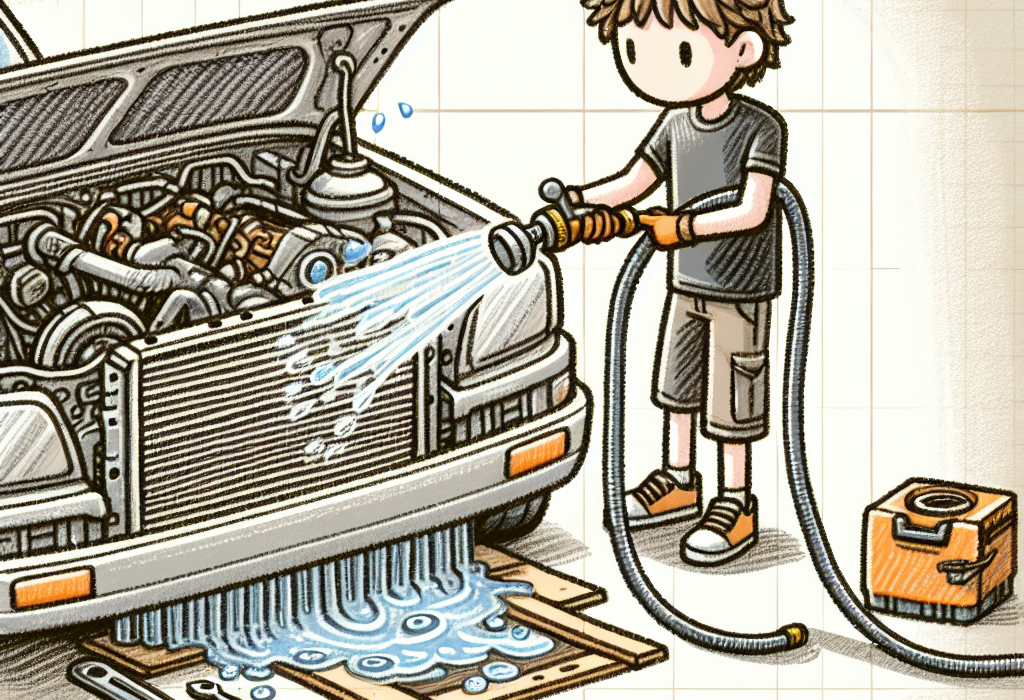
A car radiator is an important part of the cooling system, which over time gets dirty and loses its effectiveness. That’s why periodic radiator flushing is a necessary procedure to maintain proper engine operation. Many car owners ask: how to flush a radiator most effectively and safely? In this article, we will look at the preparatory stages and the best means for flushing, and also share practical advice on how to flush a car radiator correctly to avoid breakdowns and extend the life of your vehicle.
Preparation Stages for Car Radiator Flushing
Before proceeding with the flushing procedure, proper preparation is necessary. Start by cooling the engine – never open a hot radiator as this can lead to burns. When the engine has cooled, prepare appropriate containers for the drained fluid.
The next step will be draining the old antifreeze or coolant. To do this, locate the drain valve at the bottom of the radiator or disconnect the lower hose. Don’t forget to dispose of the old fluid in an environmentally safe way, as it contains toxic substances.
Before flushing the heater core at home, check the condition of hoses and connections – they should be undamaged. If you find cracks or leaks, replace damaged parts before flushing. Also prepare clean water for flushing the system after using special agents.
Best Means for Flushing Car Radiators
There are several effective ways to clean a radiator. The most accessible is flushing with regular distilled water. This method is suitable for prevention when the radiator isn’t very dirty. Simply pour water into the system, run the engine for 15-20 minutes, then drain the water. Repeat several times until the water runs clear.
For more serious cleaning, use special flushing fluids available at auto parts stores. They contain active components that dissolve scale and deposits. It’s important to follow the package instructions and not exceed the recommended usage time to avoid damaging system components.
Many car owners wonder how to flush a heater core at home. Home remedies can include citric acid solution (100-150g per 5 liters of water) or baking soda (200g per 5 liters of water). These agents are safe for aluminum radiator parts and effectively dissolve scale. After using such agents, make sure to thoroughly flush the system with clean water.
If you’re unsure how to flush a heater core by yourself, you can turn to a service center. Professionals use special pressure flushing equipment that provides the best results, especially with heavily contaminated cooling systems.
For more expert advice on car maintenance, check out our guide: How to flush a car engine’s cooling system
Step-by-Step Instructions for Radiator Flushing in Your Own Garage
Radiator flushing is a procedure that you can definitely do by yourself. Here’s a detailed instruction that will help you handle this task without visiting a service station:
- Prepare your vehicle – park it on a level surface and let the engine cool down
- Place a container under the radiator to collect the fluid
- Unscrew the expansion tank cap
- Find and open the radiator drain valve
- When the fluid is completely drained, close the valve and fill the system with clean water
After filling with water, start the engine and let it run idle for about 10-15 minutes. This will help the water circulate and wash out contaminants. Then turn off the engine, let it cool down, and drain the fluid again.
If you’re using a special flushing agent, follow the package instructions regarding engine running time and temperature regime. Usually, after flushing with a special agent, the system needs to be additionally flushed with clean water 2-3 times.
The final step is filling the system with new coolant according to your vehicle manufacturer’s recommendations. Don’t mix different types of antifreeze if you’re not sure about their compatibility.
How to Prevent Radiator Contamination: Tips for Car Owners
It’s better to prevent radiator contamination than to struggle with cleaning it later. Here are some simple tips that will help you maintain the cooling system in proper condition:
| Preventive Measure | Frequency | Expected Effect |
|---|---|---|
| Regular coolant replacement | Every 2-3 years or 60,000 km | Prevention of scale and corrosion formation |
| Coolant level check | Monthly | Timely leak detection |
| Cleaning radiator external surface | Every 6 months | Improved heat exchange, prevention of overheating |
| Cooling system flush | Every 40,000-50,000 km | Removal of accumulated deposits |
It’s important to use quality coolant that meets your vehicle manufacturer’s recommendations. Cheap antifreeze often contains fewer anti-corrosion additives, which can lead to faster system contamination.
- Monitor engine temperature while driving – sudden increases may indicate cooling system problems
- Regularly check hoses and connections for cracks or leaks
- Don’t use water instead of antifreeze even during summer
- Periodically check cooling fan operation
The air conditioning radiator also needs attention – clean it from leaves, insects, and dirt that accumulate in front of the radiator and obstruct normal air circulation.
Conclusion
Regular radiator flushing is an important procedure for maintaining normal operation of your vehicle’s cooling system. By doing it yourself, you not only save money but also better understand your car’s construction.
Remember the main rule – prevention is better than cure. Don’t wait until engine overheating problems become obvious. Follow maintenance schedules, use quality fluids, and regularly check the cooling system condition.
A properly flushed radiator will ensure normal engine operation, reduce the risk of expensive repairs, and extend your vehicle’s service life. Invest your time in cooling system maintenance now to avoid serious problems in the future.


